The Remodel
Roadmap
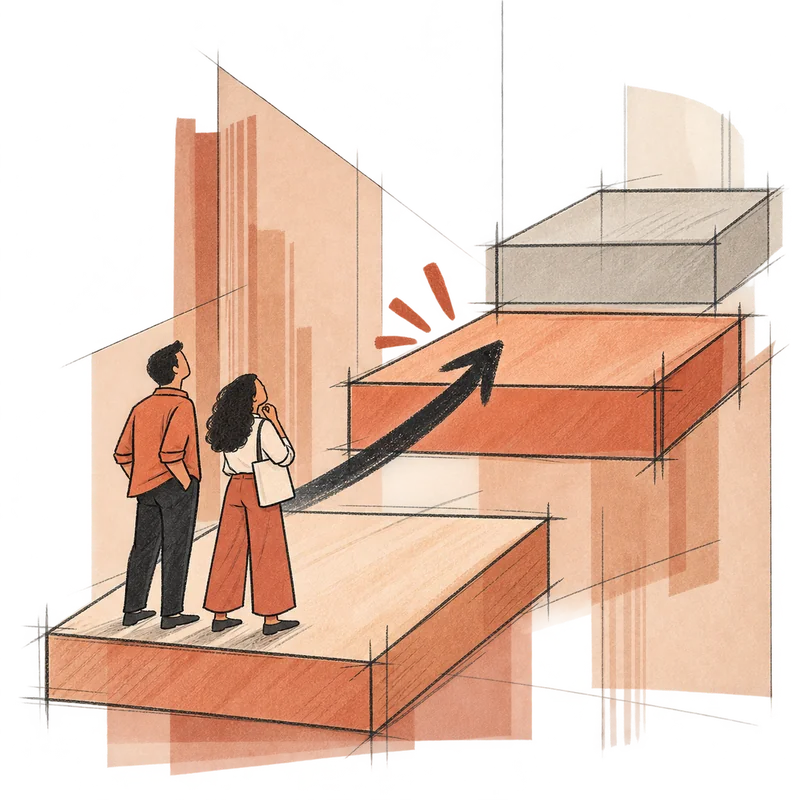
I adapted the way I organize my own remodels into seven phases you can use to plan yours. Start with the map to see what’s ahead. Then explore ten homeowner remodel planning questions to see how an answer takes shape, what you can decide now, and what can wait.
Explore the seven phasesThe seven phases I use for a remodel
From your first ideas to settling back in, each phase brings a different decision. Select one to see what to work through with your team.
Pre-project planning
What matters most for our remodel?
In my experience, pre-project planning is one of the most important phases because it sets the direction for your remodel. Your Homeowner’s Project Brief brings together what you want to change about daily life at home, what you can comfortably spend, and what your household needs during construction. It helps you choose the right professionals and gives everyone a clear sense of what to protect when plans change.
Feasibility & conceptual design
Which version of this remodel is worth pursuing?
Explore possible approaches with your team. Compare what each would give you, what the house will allow, and what it might cost before investing in detailed design.
Design development & construction documents
What exactly are we asking someone to build?
Work through the layout, materials, systems, and details. As the design and estimates get more specific, decide what to protect and where you’re willing to make a tradeoff.
Preparing for construction
Are we ready to start?
Bring contractor proposals, permits and approvals, remaining costs, scheduling, and household logistics into one picture. An early contractor conversation can happen during feasibility. This is where you confirm who will do the work, what’s included, and how the start will affect your family.
Construction
What needs our attention while the work is underway?
Know when your team needs a decision, what each option means for cost and timing, and who will follow through.
Handover & settling in
What do we need to use and care for our remodeled home?
Whether you stayed at home or moved out, walk through the work, learn how things operate, and agree on who will handle unfinished items.
Live-in refinements
Now that we’ve lived here a while, what would make everyday life work better?
Some answers only emerge after a few ordinary weeks. You might discover that morning coffee works better on the other side of the kitchen or that the reading chair needs a different light.
What are you trying to figure out about your remodel?
Choose the question on your mind. Follow the answer through the phases to see what you can do now, who can help, and which decision comes next.
How much can we comfortably put into this, and do we need all the money lined up before we start planning?
 Jason Conaway · Remodel Advisor
I’ve managed residential projects and remodeled homes of my own.
You can start planning before all the money is in place. Start with the savings you’re comfortable using. If you’ll borrow, add the loan amount you can repay while still paying your bills and saving for what matters to you. That gives you a working limit for the whole remodel.
How firm does that number need to be? A range is enough for the first conversations. During feasibility and conceptual design, I recommend settling on a limit your household agrees on and checking it with your lender if you’ll borrow. Before paying for detailed design, you want to know what you can count on, what still needs approval, and what you can pay for next.
Open the step that fits where you are today. Each one shows what to do and what you can decide.
Pre-project planning
Decide how much cash you want to use.
What to do
Start with your savings and set aside what you want to keep for emergencies, upcoming expenses, and longer-term goals. If you share finances, talk about which goals you’d both be willing to delay and which you want to protect.
What you can decide
How much cash you’d feel good putting into the remodel and how much you want to leave untouched.
Find a monthly payment that fits your life.
What to do
Ask for payment examples at a few loan amounts and try each against a real month of bills and saving. With a home equity line of credit, ask what the payment could become if rates rise or when you start repaying principal.
What you can decide
Your own borrowing limit. If you’re comfortable using $50,000 in savings and repaying a $100,000 loan, your working ceiling is $150,000, even if the bank offers more. Leave room inside that ceiling for project surprises.
Sketch when you’ll need the money.
What to do
Start with the first planning fee. For each phase, jot down roughly how much you’ll owe, when it might be due, and when you can use the money. A range or a question mark is fine for later payments.
If you’re borrowing, ask what your lender has verified and what still needs approval. For a family loan, agree together on the amount, timing, and repayments.
What you can decide
Which costs you can cover now and which upcoming payment needs a funding plan.
Optional Would resale value change what you’re willing to spend?
Ask a local real estate agent or appraiser what your home might sell for today. Then ask what it might sell for in the same market with the changes you’re considering. Recent sales of similar homes nearby can help you put a range on each.
Say the whole remodel would cost $150,000 and might add $100,000 to the home’s value. Would the years you’ll enjoy living there make the other $50,000 feel worthwhile to you?
If you also want to estimate your equity after the remodel, start with the estimated finished value and subtract what you expect to owe on all loans secured by the home when the work is done.
Feasibility & conceptual design
Set the number you want your team to design around.
What to do
Give your designer your whole-project limit. Set aside fees, temporary living costs, and a reserve before comparing what’s left with early construction estimates. If the range is too wide to choose a direction, ask a contractor for a cost check.
Add the expected design fees and their timing to your payment timeline. If resale matters to you, compare what each option might cost with the value it might add.
What you can decide
Which option feels worth developing and whether you can cover the next round of design fees.
Design development & construction documents
Recheck the numbers as the drawings get more specific.
What to do
As your team prices the work and materials, update the same timeline. Mark what you’ve paid and replace rough amounts and dates wherever you have a firmer estimate. If you’re borrowing, ask which drawings or bids your lender still needs.
If resale helped you choose this design, revisit the comparison when the scope or price changes. A more expensive finish may be worth it to you even if buyers would pay about the same for either one.
What you can decide
Whether this version still feels worth the cost or you’d like to change something while it’s still on paper.
Preparing for construction
Match the payment dates to the money.
What to do
Before signing, put the contractor’s deposit and progress payments on your timeline alongside any costs you’ll pay separately. Match each payment to money you’ll have by then. If your lender releases funds in stages, ask what triggers each release. You want to catch a deposit due Monday that the lender can’t fund until Friday.
If resale is part of your decision, compare the full cost, using the proposal in hand, with your latest estimate of added value.
What you can decide
Whether you’re comfortable signing, or need to change the scope or payment timing first.
Construction
Keep track of what’s paid and what’s coming next.
What to do
As bills come in, mark what you’ve paid and check that you can cover the next payment. Before approving a change, update the expected final cost, the reserve you’d have left, and when the extra money would be due. If you’re using a loan, check whether the lender needs to approve it too.
What you can decide
Whether to use some of your reserve, change something else, or pass on the extra work.
What’s the next step for your remodel?
Tell me what you’d like to change at home and where you feel stuck. We’ll build on what you’ve already figured out and choose one practical step you can take next.
After our call, I’ll email you a recap of what we discussed, how to get started on that step, and what can wait.