The Remodel
Roadmap
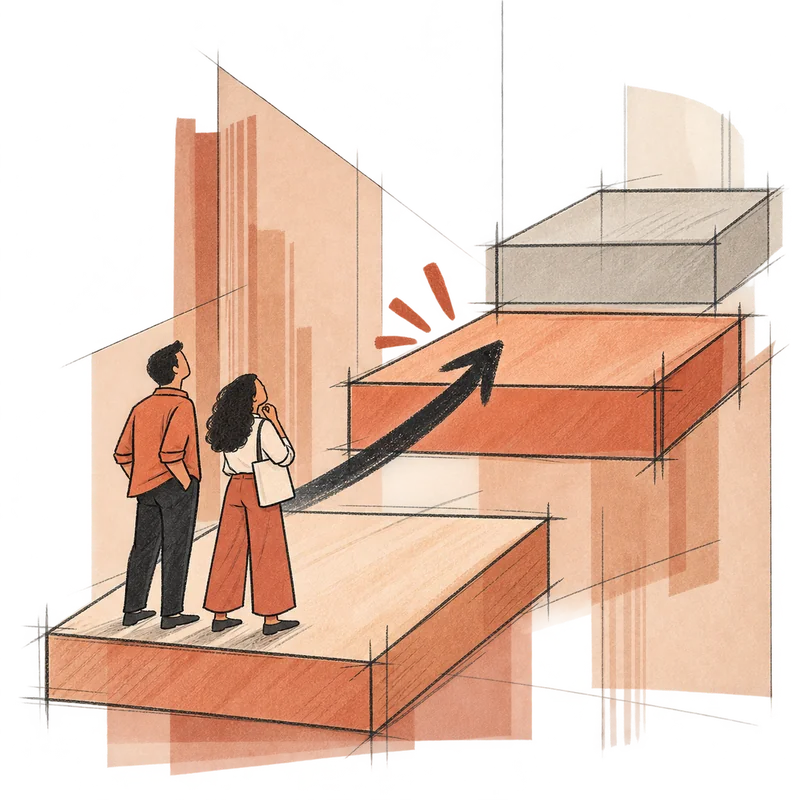
I adapted the way I organize my own remodels into seven phases you can use to plan yours. Start with the map to see what’s ahead. Then explore ten homeowner remodel planning questions to see how an answer takes shape, what you can decide now, and what can wait.
Explore the seven phasesThe seven phases I use for a remodel
From your first ideas to settling back in, each phase brings a different decision. Select one to see what to work through with your team.
Pre-project planning
What matters most for our remodel?
In my experience, pre-project planning is one of the most important phases because it sets the direction for your remodel. Your Homeowner’s Project Brief brings together what you want to change about daily life at home, what you can comfortably spend, and what your household needs during construction. It helps you choose the right professionals and gives everyone a clear sense of what to protect when plans change.
Feasibility & conceptual design
Which version of this remodel is worth pursuing?
Explore possible approaches with your team. Compare what each would give you, what the house will allow, and what it might cost before investing in detailed design.
Design development & construction documents
What exactly are we asking someone to build?
Work through the layout, materials, systems, and details. As the design and estimates get more specific, decide what to protect and where you’re willing to make a tradeoff.
Preparing for construction
Are we ready to start?
Bring contractor proposals, permits and approvals, remaining costs, scheduling, and household logistics into one picture. An early contractor conversation can happen during feasibility. This is where you confirm who will do the work, what’s included, and how the start will affect your family.
Construction
What needs our attention while the work is underway?
Know when your team needs a decision, what each option means for cost and timing, and who will follow through.
Handover & settling in
What do we need to use and care for our remodeled home?
Whether you stayed at home or moved out, walk through the work, learn how things operate, and agree on who will handle unfinished items.
Live-in refinements
Now that we’ve lived here a while, what would make everyday life work better?
Some answers only emerge after a few ordinary weeks. You might discover that morning coffee works better on the other side of the kitchen or that the reading chair needs a different light.
What are you trying to figure out about your remodel?
Choose the question on your mind. Follow the answer through the phases to see what you can do now, who can help, and which decision comes next.
Should we do it all at once or in phases? What might we have to tear out twice?
 Jason Conaway · Remodel Advisor
I’ve managed residential projects and remodeled homes of my own.
I’d start with one plan for the whole remodel. Then compare three ways to build it: do it all now, build in separate rounds, or wait and do it all together later.
Building in phases makes sense when the first round gives you something you’d value now, leaves you with a home you can comfortably live in between rounds, and gives the next crew a sensible place to start. If waiting would let you tackle connected work together and put your family through construction once, that option deserves a fair look, too.
Open the step that fits where you are today. Each one shows what to do and what you can decide.
Pre-project planning
Figure out why you’re considering separate rounds.
What to do
Talk through two questions with your household. What would make it worth starting now? What would need to be true before we could start again? Maybe you need time to save. Maybe the money is available, but there’s only one stretch of the year when you could move out. Put those conditions in your Homeowner Project Brief, the document where you record what matters to your family and what your team needs to plan around.
What you can decide
Whether money, timing, or both are driving the decision, and what you’d gain by getting part of the remodel done sooner.
Feasibility & conceptual design
See the whole remodel and find a place you could comfortably stop.
What to do
Ask your designer to show how the finished home could work as a whole. That’s your master plan. As the concept takes shape, look at one possible first round. Picture an ordinary morning in the house after the crew leaves. What’s better? What are you still working around? If the next round takes longer to start than you hope, would that still work for you?
What you can decide
Whether the first round would improve daily life enough to be worthwhile on its own.
Design development & construction documents
Find the places where one round affects the next.
What to do
As conceptual design wraps up, ask your designer and a contractor to walk through the proposed sequence together. Say you want new hallway flooring in the first round and a wider kitchen doorway in the second. Ask, “When you widen that doorway, what happens to the floor we just paid for?” Their answer may change where you stop.
What you can decide
Which jobs to do together, what to prepare for while a wall or floor is open, and which finishes are worth saving for later.
Compare starting now with waiting.
What to do
With the contractor’s input, compare the options that look realistic. For each, look at when you’d need the money, how many times you’d have to pack up or move out, and how long you’d lose use of rooms you rely on. For work you’d put off, ask which prices and crew dates would need to be checked again. Then weigh those uncertainties against what waiting could give you, such as more savings or a better time to be out of the house.
What you can decide
Whether to build now, split the work, or wait and build once. If you choose separate rounds, you can name what will tell you it’s time to start the next one.
Preparing for construction
Put the stopping point in the proposal.
What to do
If you choose separate rounds, ask the contractor to spell out what will be finished and usable when this round ends, what will be ready for later, and what the price covers. If you’re counting on having a working kitchen between rounds, make sure you and the contractor mean the same thing by “working kitchen.”
What you can decide
Whether you’d be comfortable signing for this round even if the next one has to wait.
Construction
Keep a record for the next crew.
What to do
Before work gets covered up, ask the contractor to document anything a future crew will need to find. A labeled photo showing where plumbing was left for a future bathroom gives you something concrete to hand over, even if a different contractor comes back.
What you can decide
When you’re ready to restart, you can use that record to confirm what’s already in place and what still needs to be priced or built.
What’s the next step for your remodel?
Tell me what you’d like to change at home and where you feel stuck. We’ll build on what you’ve already figured out and choose one practical step you can take next.
After our call, I’ll email you a recap of what we discussed, how to get started on that step, and what can wait.